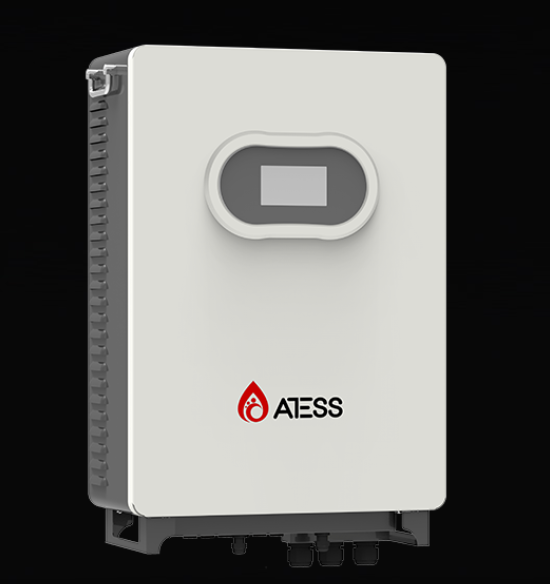
Many businesses consider placing inverters indoors when they need stable energy support close to their equipment. Decisions often revolve around operating conditions, ventilation, and compatibility with existing electrical setups. Brands like Atess design systems for varied environments, allowing installers to choose suitable models for enclosed spaces. In small commercial rooms, the 20kw hybrid inverter is often arranged in technical areas where cable routing is straightforward. For remote workshops without grid access, the 15kw off grid inverter supplies dependable power for tools and lighting. Evaluating room layout and temperature conditions helps determine whether indoor placement is appropriate.
Performance Requirements in Indoor Scenarios
Indoor settings usually demand controlled heat dissipation and careful installation spacing. Equipment must support steady operation even when loads are sensitive or fluctuate throughout the day. This is why installers assess the behavior of the 20kw hybrid inverter when integrating solar and storage systems inside a facility. Its ability to balance input sources helps maintain smooth operation around work areas. In similar environments, the 15kw off grid inverter provides continuous off-grid energy using DC coupling, reducing unnecessary transitions and supporting essential shop functions. These characteristics allow the units to perform reliably when installed inside properly prepared rooms.
Indoor Applications Related to Safety
Safety in indoor use depends not only on the device but also on the operational scenario. In small rural shops, the 15kw off grid inverter replaces fuel-powered generators, reducing fumes and maintaining a consistent supply. In grid-connected facilities, the 20kw hybrid inverter assists small commercial loads by coordinating renewable energy usage and grid interaction. Because Atess develops systems capable of rapid transitions between grid and off-grid modes, installers apply them where continuity is needed to protect equipment. When appropriate ventilation, clearances, and installation standards are followed, indoor environments can support safe operation.
Conclusion
The safety of using inverters indoors depends on matching the equipment with the conditions of the space. Installers examine airflow, electrical demand, and layout before selecting a system. Both the 20kw hybrid inverter and 15kw off grid inverter can be used indoors when these requirements are met, and Atess offers solutions that integrate into grid-connected and off-grid arrangements. With proper planning and adherence to installation guidelines, indoor inverter setups can function safely and reliably.