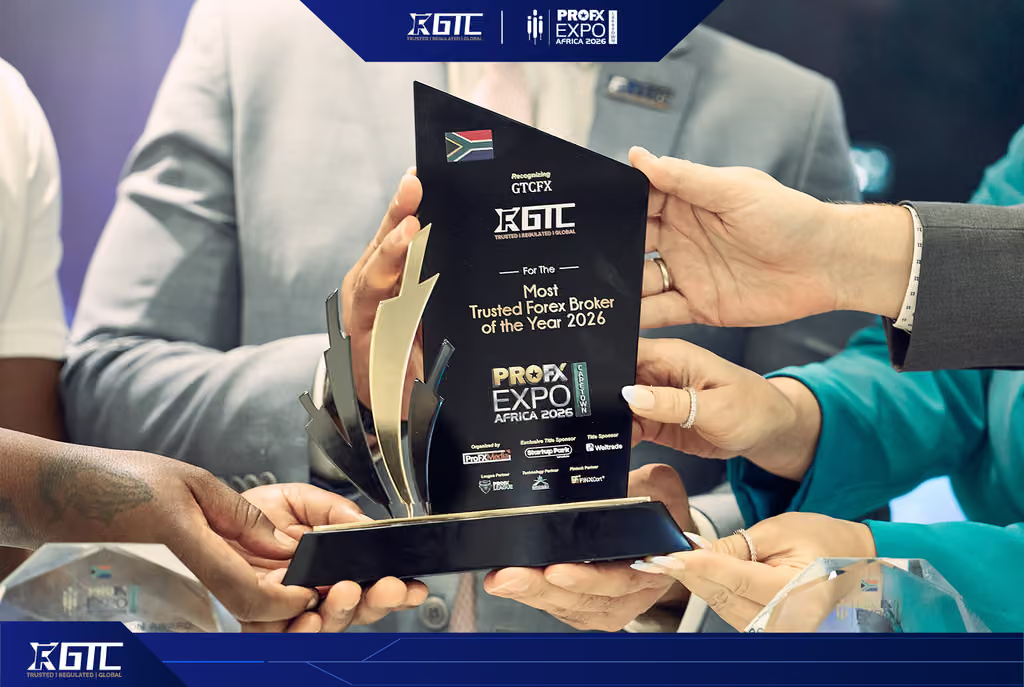
Navigating global financial markets requires a reliable technological backbone. For modern traders seeking exposure to foreign exchange, commodities, global indices, and equities without taking direct physical ownership of underlying assets, Contracts for Difference (CFDs) remain a primary instrument. Selecting an online CFD trading platform involves looking beyond surface marketing and evaluating core structural elements. Traders frequently encounter challenges related to order execution delays, unpredictable slippage, restrictive leverage rules, and high holding costs. A well-constructed trading environment addresses these core pain points by offering transparent pricing models, robust order matching engines, and adaptable risk management features. When choosing a CFD broker, market participants must systematically evaluate how execution speed, software access, and account flexibility interact to support individual trading strategies. Brokerages such as GTCFX reflect this operational focus by providing infrastructure engineered for diverse market conditions.
Order Execution Speed and Market Latency Mitigation
In fast-moving markets, the time elapsed between clicking an order button and obtaining order confirmation influences profitability. Order execution latency often determines whether a position fills at the requested price or suffers from adverse slippage. During high-impact macroeconomic events, such as central bank rate decisions or non-farm payroll releases, market liquidity shifts rapidly. An online CFD trading platform operating on sub-10 millisecond execution speeds helps preserve pricing accuracy by reducing the window in which market quotes can change. Fast processing capabilities allow traders to execute orders closer to live quotes across volatile instruments like gold, crude oil, and major currency pairs.
Furthermore, trade routing technology plays a vital role in executing automated strategies and expert advisors. High-frequency strategies rely on minimal trade latency to capture brief price discrepancies across instruments. When institutional-grade infrastructure supports retail trading accounts, traders encounter fewer re-quotes and lower slippage during execution spikes. By connecting client terminals to deep liquidity pools, GTCFX facilitates prompt execution, assisting active market participants in managing trade entry and exit with greater precision.
Dynamic Leverage Structures and Capital Efficiency
Leverage remains one of the most powerful yet dangerous mechanisms in financial markets. It grants traders the ability to control large market positions with a fraction of the full transaction capital. While elevated leverage amplifies potential profit, it equally magnifies portfolio drawdowns. Consequently, risk-conscious traders prioritize platform mechanisms that balance leverage flexibility with stringent downside protections.
Flexible leverage ratios, extending up to 1:2000, enable traders to optimize margin utilization based on account balance and risk tolerance. Minimal margin requirements, starting from 0.1%, allow efficient capital deployment across multiple concurrent positions. However, static leverage applied universally across volatile markets can lead to rapid account depletion. To mitigate this hazard, advanced systems implement dynamic leverage parameters that automatically adjust margin requirements as position sizes increase. Additionally, stop-out protection mechanisms, such as a 20% stop-out threshold, serve as a critical risk buffer. This buffer provides positions additional breathing room during momentary market spikes before automated liquidation takes place. Through these structured risk rules, GTCFX offers an adaptable environment where traders can adjust position sizes responsibly while safeguarding account equity.
Account Architecture and Software Compatibility
A comprehensive trading setup must accommodate diverse trading styles, ranging from retail swing trading to institutional algorithmic strategies. The underlying trading platform serves as the central hub for chart analysis, technical indicator application, and order submission. MetaTrader 4 (MT4) and MetaTrader 5 (MT5) remain fundamental industry tools, offering robust charting engines, custom scripting capabilities, and extensive technical analysis libraries. Mobile applications, such as GTC Go, complement desktop software by offering full account management and trade execution on portable devices.
Beyond terminal selection, account architecture determines transaction costs and trade execution models. Standard trading accounts typically feature zero-commission structures with costs wrapped into competitive spreads starting from 1.0 pips, making them suitable for everyday retail traders. In contrast, electronic communication network (ECN) accounts provide raw market spreads starting from 0.0 pips alongside a fixed commission structure per lot traded. ECN pricing models cater specifically to scalpers and algorithmic traders who require direct market depth and tight bid-ask spreads. By maintaining access to over 27,000 trading instruments across forex, metals, energy, crypto, and equity indices, GTCFX enables users to align account parameters with specific asset preferences and tactical goals.
Strategic Frameworks for Selecting an Online Trading Partner
Evaluating a suitable financial intermediary requires a holistic approach that weighs technological performance against operational reliability. Traders should examine key operational pillars including server execution speed, regulatory compliance across operating entities, deposit safety, and instrument diversity. Relying solely on headline promotional offers or low advertised spreads can obscure hidden costs, such as wide floating spreads during off-peak hours or restrictive withdrawal terms.
A structured CFD broker maintains operational clarity across pricing models, platform access, and customer support channels. As global trading volumes grow, the demand for stable multi-asset trading infrastructure continues to rise. Brokers like GTCFX address these requirements by combining fast order processing, configurable leverage options, and popular trading terminals like MT4 and MT5. By prioritizing fast execution speeds, transparent pricing structures, and customizable risk controls, market participants can establish a sustainable foundation for navigating volatile global markets with discipline and confidence.