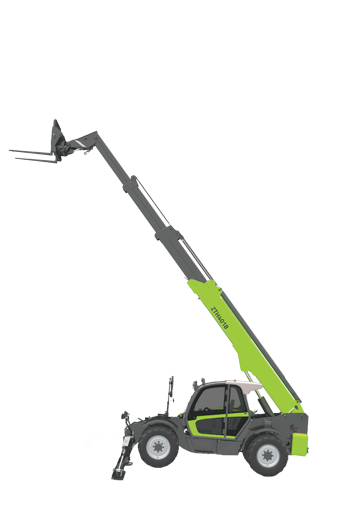
Precast concrete and modular construction rely on the timely movement of heavy components, from concrete panels and structural sections to volumetric modules and bundled building materials. Handling these loads on unfinished ground or crowded construction sites requires equipment that combines lifting capacity, reach, and mobility. An off-road telehandler can help contractors coordinate material delivery, reduce unnecessary repositioning, and maintain a more predictable workflow across demanding construction environments.
For project managers, equipment rental companies, and construction procurement teams, selecting the right machine involves more than comparing maximum lifting capacity. Ground conditions, load dimensions, placement height, and operating space all affect equipment suitability. Zoomlion Access offers telehandler options such as the non-rotating ZTH4018, providing a specification-based starting point for evaluating material-handling requirements on precast and modular projects.
Why Off-Road Mobility Matters on Precast and Modular Sites
Precast and modular projects often involve temporary access roads, compacted soil, gravel, and changing ground conditions as foundations and utilities are installed. Equipment that can travel across suitable uneven terrain helps crews move materials between unloading zones, temporary storage areas, and installation points without relying exclusively on paved routes.
Zoomlion Access identifies off-road capability and gradeability among the ZTH4018’s features. Its published specifications include 0.42 m of minimum ground clearance, a frame leveling angle of ±10°, and three steering modes: front-wheel, four-wheel, and crab steering. These features can support maneuverability and alignment on suitable sites, although operators must still assess ground bearing capacity, slope, and machine stability before each task.
Matching Lift Capacity to Precast Components
Concrete panels, stair flights, beams, and other precast elements can be heavy, bulky, and difficult to position. Modular construction adds different challenges: packaged building sections and prefabricated assemblies may require careful placement around structures, access corridors, and other trades. Procurement teams should therefore evaluate both load weight and the position where each item must be delivered.
The ZTH4018 has a rated capacity of 4,000 kg and a maximum lift height of 17.6 m. However, rated capacity does not mean the machine can lift 4,000 kg at every boom position. Zoomlion lists a lift capacity of 2,500 kg at maximum height and 850 kg at maximum forward reach of 13.4 m. The manufacturer’s load chart must determine whether a specific load and configuration are suitable.
This distinction is particularly important when placing materials over obstacles or delivering components to elevated work areas. A load that is manageable near the machine may exceed the allowable capacity when the boom extends farther forward. Contractors should confirm component weight, dimensions, center of gravity, attachment compatibility, and the required placement point before assigning the lift.
Planning Material Flow Across the Site
A well-organized material-handling plan starts before trucks arrive. Project teams can map delivery routes, identify unloading and staging areas, and sequence components according to the installation schedule. Keeping frequently used materials accessible while separating vehicle routes from pedestrian areas can reduce unnecessary travel and congestion.
An off-road telehandler can serve as a flexible link between delivery vehicles, temporary storage, and work zones when its capacity and configuration suit the task. For precast work, lifting points and approved handling methods must also be respected; a telehandler should not automatically replace a crane or specialized lifting system for oversized or structurally sensitive elements.
For modular projects, the same planning principle applies to packaged assemblies, insulation, framing bundles, and installation supplies. Clear staging zones help prevent repeated handling, while advance coordination with suppliers can reduce waiting time. Actual productivity depends on site layout, travel distance, operator skill, load characteristics, and the availability of compatible attachments.
Safety, Attachments, and Operating Conditions
Equipment selection should account for more than headline specifications. Uneven ground, soft soil, changing gradients, overhead obstructions, and limited visibility can all affect safe operation. Before lifting, the site team should inspect the travel route, verify ground conditions, establish exclusion zones, and ensure the operator is trained and authorized to use the machine.
The ZTH4018 features a cab designed to meet FOPS and ROPS requirements, automatic fault detection and alarms, and frame leveling. These systems support operator protection and machine control, but they do not eliminate the need for proper training, inspections, and adherence to the operating manual. Loads must remain within the applicable load chart limits, with the correct attachment and machine configuration.
Attachments also influence the equipment decision. Forks may suit palletized supplies and appropriately designed bundles, while specialized precast components may require engineered lifting arrangements or different machinery. Buyers should confirm that an attachment is approved for the machine and intended load. An off-road telehandler should not be selected for a lift simply because its maximum rated capacity appears sufficient.
Evaluating Full-Service Telehandler Solutions
For contractors managing several projects, full-service telehandler solutions can simplify equipment planning by bringing machine selection, technical support, maintenance arrangements, and operator guidance into the procurement discussion. The precise services vary by supplier, so buyers should confirm what is included rather than assume every package covers the same support.
A practical evaluation should consider machine availability, service response times, spare-parts access, maintenance responsibilities, attachment options, and replacement arrangements if equipment becomes unavailable. Rental companies should also compare expected utilization, transport costs, and the suitability of each machine for the terrain and lifting demands of their customer base.
Zoomlion Access offers a range of telehandlers, including the non-rotating ZTH4018. Its 4,000 kg rated capacity, 17.6 m maximum lift height, and 13.4 m maximum forward reach provide useful reference points for contractors assessing demanding material-handling tasks. Buyers can consult the official product specifications and discuss site requirements with the supplier before making a purchasing or rental decision.
Building a More Reliable Material-Handling Strategy
Precast and modular construction benefit from equipment plans that balance lifting performance, terrain capability, site access, and safe operating practices. A suitable off-road telehandler can support material movement across changing site conditions, provided its actual capacity at the required height and reach matches the task.
For procurement teams, full-service telehandler solutions are worth assessing alongside machine specifications because equipment support and maintenance planning can influence availability throughout a project. Comparing these factors against delivery schedules, ground conditions, and component requirements helps contractors make informed decisions. With its published performance data and off-road design features, Zoomlion Access‘s ZTH4018 is one option to evaluate when developing a material-handling plan for precast and modular construction.