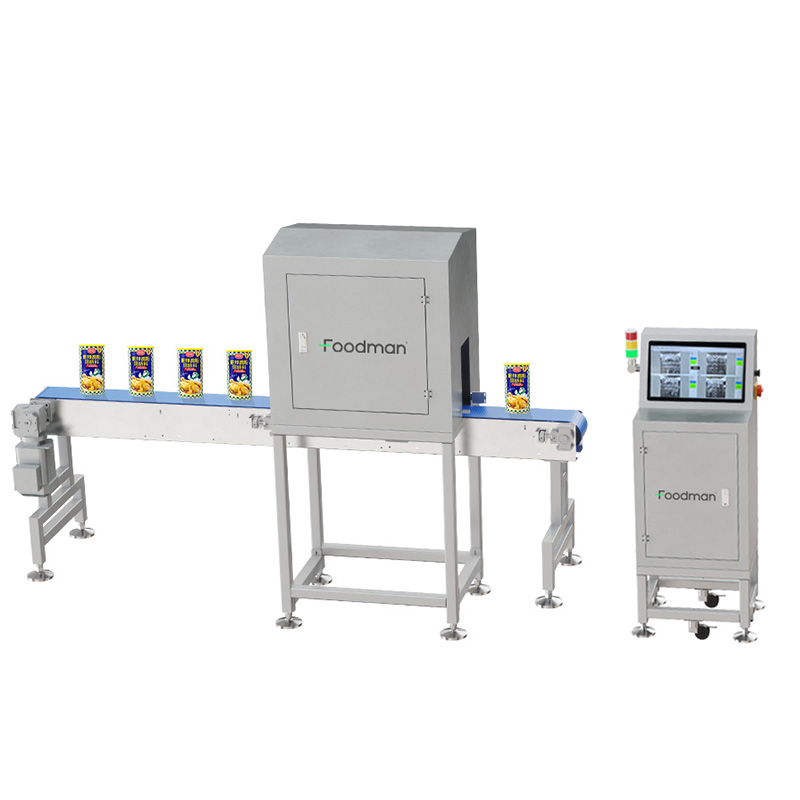
Food packaging lines operate under tight production schedules, yet visual defects can appear in fractions of a second. A vision inspection machine provides a practical way to examine seals, printed codes, package surfaces, and other visible details without interrupting normal throughput.
Manual checks alone can miss irregularities. Image-based inspection offers a more consistent way to find them. It works even across large production volumes. Foodman Vision uses industrial cameras and AI algorithms. This setup performs 360° online inspection. It also fits into existing production lines.
Packaging Defects That Deserve Close Attention
Packaging quality involves more than whether a container looks clean. Seal integrity, code readability, label placement, and surface condition can each affect product handling and downstream processing. Small deviations may be difficult to notice during rapid manual inspection, particularly when packages pass a checkpoint every few seconds.
Seal inspection deserves particular attention because weak or incomplete closures may compromise the package after production. Camera-based inspection can examine the visible sealing area from multiple angles and compare captured images against defined quality criteria. Such checks are useful for identifying abnormal edges, uneven sealing, or other visible inconsistencies before products move farther along the line.
Printed information creates another inspection challenge. Batch numbers, dates, barcodes, and other codes need to remain readable and correctly positioned. Image analysis can assess these elements at production speed, making it possible to identify missing, blurred, damaged, or incorrectly printed information without depending entirely on an operator’s visual judgment.
How Image-Based Inspection Fits Production Lines
Modern packaging facilities rarely operate around isolated machines. Conveyors, fillers, sealers, printers, labeling equipment, and rejection mechanisms must work together, so inspection equipment needs to fit naturally into the existing workflow. Compatibility with line layouts therefore matters just as much as image quality.
Camera placement influences what can actually be detected. Some packaging defects become visible only from particular angles, while reflective materials can create glare that obscures important details. Multiple viewing positions and carefully controlled lighting help capture useful images, allowing inspection criteria to remain relevant across different package shapes and surface finishes.
The inspection stage also needs a clear response mechanism. Once an abnormal package is identified, production staff need to know where it is and how it should be removed. A well-integrated vision inspection machine can communicate inspection results with downstream equipment so that rejected items are separated without requiring workers to monitor every package individually.
Balancing Speed With Inspection Accuracy
High-speed packaging creates a fundamental challenge: more products pass through the line in less time, leaving only a short window for each inspection. Human operators may struggle to maintain the same level of attention throughout long shifts, especially when defects are subtle or production volumes are high.
Image processing offers a different method. Each package can be evaluated against predefined visual characteristics, while the same inspection logic is applied repeatedly. Such consistency can be valuable in food and beverage operations where thousands of units may share nearly identical packaging and small deviations are difficult to distinguish by eye.
Inspection performance should not be judged solely by the number of defects detected. False rejects also matter because correctly packaged products can be unnecessarily removed if inspection criteria are too sensitive. Proper calibration, representative reference images, and periodic review of inspection parameters help manufacturers strike a more practical balance between detection and production efficiency.
Adapting Inspection to Different Package Formats
Packaging materials vary considerably across food production. Transparent films, glossy containers, cartons, pouches, trays, and printed surfaces each present different visual characteristics. Reflection, transparency, color variation, and changing package dimensions can influence the quality of captured images.
Production changes create another consideration. A line may handle several package sizes or designs during the same shift, meaning inspection settings cannot always remain identical. Flexible configuration allows relevant criteria to be adjusted according to the package being processed, while standardized procedures help reduce unnecessary setup complexity.
Such adaptability becomes especially useful when inspection covers several defect categories simultaneously. A single checkpoint may examine sealing condition, printed information, and visible package appearance, giving quality teams a broader view of what is happening on the line rather than forcing every issue into a separate manual inspection step.
Custom Engineering and B2B Support
Packaging lines differ from plant to plant, and a fixed inspection setup rarely fits every case. Foodman Vision addresses this through OEM and ODM cooperation. Camera count, lighting angles, lens selection, and rejection logic can be adjusted around a customer’s specific packages and line speed. Software interfaces can also be adapted to existing control systems.
For B2B buyers, this means the vision inspection machine can be configured to match real production conditions rather than forcing the line to adapt to a standard unit. Sample trials with actual packaging help confirm detection accuracy before installation.
After commissioning, technical support, spare parts, and operator training help maintain consistent performance. As package designs or product mixes change, the system can be updated without replacing the entire hardware. This service-oriented approach keeps inspection aligned with long-term production needs.
Building More Reliable Packaging Checks
A successful inspection process begins with clearly defined defect criteria rather than simply adding cameras to a production line. Manufacturers need to determine which characteristics matter, what variation is acceptable, and which findings require rejection. This groundwork helps prevent inspection from becoming either unnecessarily strict or too permissive.
Packaging inspection ultimately works best as part of a broader quality process. Operators, production equipment, inspection criteria, and review procedures each contribute to the final result. With appropriate configuration, a vision inspection machine can make high-volume visual checks more consistent while giving quality teams clearer information about defects and their possible causes. Foodman Vision illustrates how this approach can be applied without turning the inspection stage into a separate production bottleneck.