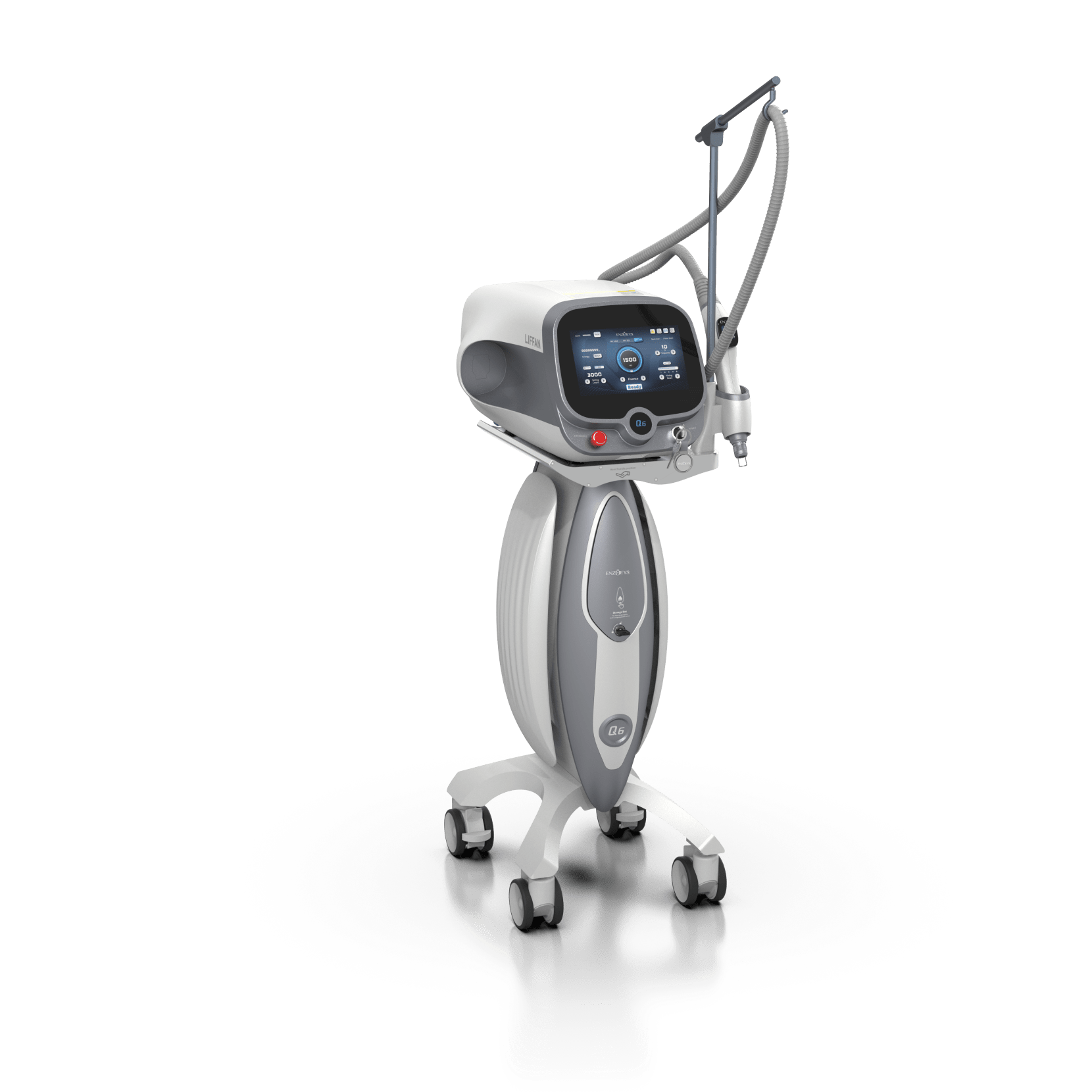
Addressing melasma presents dermatologists with a complex challenge due to its recurring nature and sensitivity to thermal irritation. While high-power optical platforms serve as a standard Q switch laser tattoo removal machine for shattering dense artificial dyes, treating facial hyperpigmentation requires sub-thermolytic energy delivery. Manufacturers like ENZOEYS develop short-pulse laser platforms that can be used for targeted pigmentation treatments with controlled energy delivery.
Pathophysiology of Melasma and Dermal Pigment Accumulation
Melasma stems from hyperfunctional melanocytes producing excessive melanin in response to hormonal fluctuations and ultraviolet exposure. Pigment deposits accumulate within superficial epidermal layers or drift downward into the papillary dermis.
Differentiating epidermal melasma from deeper dermal involvement dictates treatment selection. Because aggressive thermal exposure can exacerbate pigment production, practitioners must choose energy modalities that avoid excessive vascular stimulation or tissue inflammation.
Photothermal and Photoacoustic Mechanisms in Pigment Reduction
Sub-thermolytic energy pulses shatter intracellular melanosomes through localized acoustic vibrations rather than intense heat. Utilizing a calibrated Q switched ND YAG laser machine allows clinicians to fragment targeted pigment clusters into micro-particles without damaging adjacent epidermal structures.
Scattered microscopic melanin particles are subsequently cleared through natural cellular pathways. Gentle acoustic disruption preserves baseline melanocyte function, lowering risks of post-procedure darkening across sensitive Fitzpatrick phototypes.
Controlled Thermal Delivery and Extended Exposure Modes
Managing treatment discomfort remains critical during multi-pass facial procedures. Modulating pulse durations helps distribute optical energy evenly over slightly longer exposure windows, keeping surface thermal spikes low.
Incorporating specialized HPT mode configurations extends the duration of light exposure on the skin surface. This extended exposure profile softens energy delivery, effectively reducing patient discomfort while delivering therapeutic energies needed for pigment disruption. Operating a multi-mode Q switch laser tattoo removal machine platform allows practices to adjust pulse characteristics based on lesion depth and sensitivity.
Spot Stability and Energy Distribution During Rapid Scanning
High-frequency operation requires uniform beam geometry across fast scanning passes. System engineering from ENZOEYS emphasizes optical stability, preventing beam deformation during rapid pulse delivery.
Maintaining consistent beam footprints helps prevent sudden spot deformation during rapid treatment. Uniform energy distribution can support consistent energy delivery across different treatment areas
When spot geometry remains stable throughout the scanning sequence, clinicians can confidently treat curved anatomical zones—such as the periorbital area or jawline—without compensating for energy fluctuations mid-pass, which would otherwise require constant manual adjustment and increase treatment duration.
Combining Modalities with Carbon Spectra Peel Procedures
Exfoliating superficial dead skin cells enhances light absorption during subsequent pigment-targeting passes. Applying a specialized carbon lotion allows optical energy to blast away surface debris and refine pore structures.
Executing a carbon spectra peel procedure alongside low-fluence laser toning restores skin radiance while addressing deeper hyperpigmentation. Using a stable Q switched ND YAG laser machine for dual-phase protocols improves overall skin texture without compromising epidermal safety.
This combination approach offers a distinct advantage for clinics managing patients with multiple concerns—such as dullness, enlarged pores, and patchy pigmentation—by delivering visible surface improvement from the first session while the deeper-toning effects accumulate progressively. The dual-layer action not only enhances patient satisfaction through immediate radiance but also positions the procedure as a premium offering that justifies higher treatment pricing and encourages package bookings.
Multi-Functional Clinical Capabilities Beyond Melasma Care
Versatile optical hardware accommodates diverse clinical indications within a single system architecture. Devices such as Q-switched Nd:YAG laser systems can support applications including pigmentation removal, tattoo removal, acne treatment, and skin rejuvenation.
Integrating multi-application platforms like the LIFFAN Q6 expands service offerings while optimizing equipment utility. Multi-wavelength support enables practices to manage varied aesthetic concerns through flexible treatment parameters.
Realistic Clinical Outcomes and Session Trajectories
Clearing stubborn melasma requires a series of low-fluence treatment sessions spaced several weeks apart. Initial passes with a Q switched ND YAG laser machine produce gradual lightening rather than immediate removal.
Patients can expect steady improvement over multiple visits alongside ongoing topical care and strict sun protection. Setting realistic expectations prevents overtreatment while supporting long-term pigment suppression.
Documenting progress with standardized photography at each visit not only tracks subtle changes that may be missed by the naked eye but also reinforces patient motivation during the gradual improvement phase—reducing the likelihood of treatment abandonment when visible results take several months to fully manifest.
Equipment Stability and Operational Demands in Clinical Settings
High-volume aesthetic centers demand internal cooling infrastructure that supports sustained daily use. Inconsistent power delivery can lead to fluctuating energy levels and variable clinical results.
Hardware models like the LIFFAN Q6 incorporate robust optical cavities that maintain steady output across long operational hours. Durable components protect practice continuity and uphold treatment standards.
Conclusion
Addressing complex hyperpigmentation requires combining gentle photoacoustic technology with steady energy calibration. Utilizing extended light exposure modes alongside stable beam geometry helps clinicians achieve meaningful pigment reduction while protecting epidermal integrity. Advanced platforms developed by ENZOEYS demonstrate how versatile short-pulse technology supports safe, repeatable treatment protocols for modern aesthetic practices.