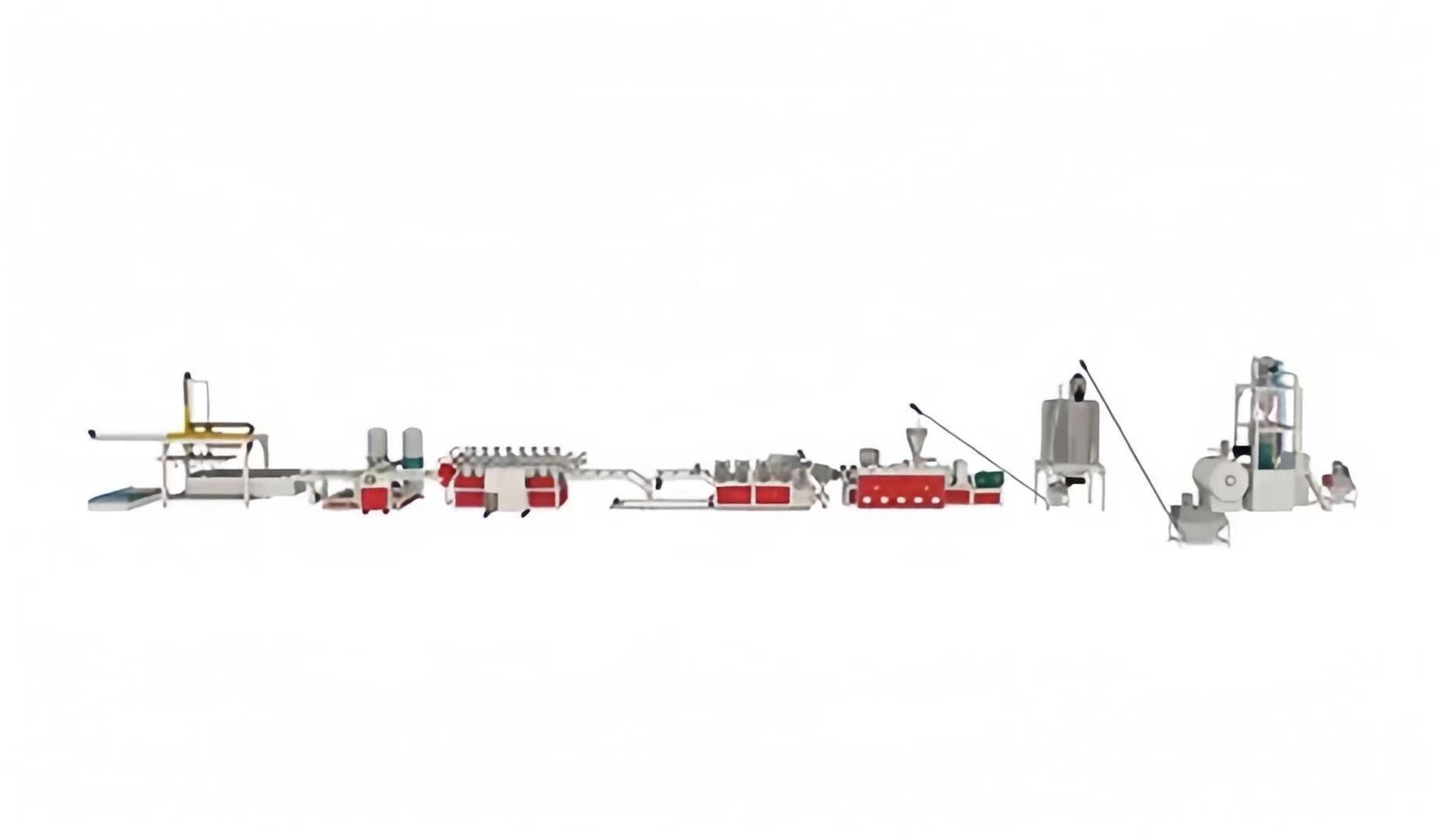
Choosing the right equipment configuration is an important decision for WPC flooring manufacturers. A production line that works well for a small factory with flexible orders may not meet the needs of a large-scale manufacturer supplying continuous projects. Before investing in equipment, businesses need to consider production volume, labor structure, product variety, and future expansion plans.
A wpc flooring production line usually includes material feeding, extrusion, shaping, cooling, and cutting processes. The automation level of each section determines how operators interact with the equipment and how easily the production process can be managed.
Semi-Automated WPC Flooring Production Lines: Flexibility for Changing Production Needs
Semi-automated systems are often suitable for manufacturers that require reliable production but still need flexibility in daily operations. In this type of setup, major processes such as extrusion and forming are handled by machinery, while certain tasks may require operator involvement.
For factories producing multiple WPC flooring designs, manual participation can be useful during product changes. Operators can adjust parameters according to different formulations, thickness requirements, or surface designs. This flexibility is valuable when production schedules involve frequent order changes.
However, semi-automated production requires experienced workers who understand the relationship between material conditions and machine settings. For example, changes in wood fiber content or additive ratios may influence melt flow during extrusion. Operators need to monitor pressure, temperature, and output appearance to maintain product consistency.
In daily operation, labor involvement is also higher. Material handling, production inspection, and some adjustment tasks may require additional manpower. For manufacturers with moderate production capacity, this approach can provide a balance between equipment investment and operational control.
Fully Integrated Systems for Higher Production Consistency
Fully integrated production lines connect different stages of manufacturing into a more coordinated workflow. Material feeding, extrusion, calibration, cooling, and cutting can work together through centralized control systems, reducing manual intervention during normal operation.
For factories producing large quantities of WPC flooring, a wpc flooring extrusion machine with integrated automation features can help maintain consistent processing conditions over long production periods.
One practical benefit is parameter coordination. During continuous extrusion, small changes in temperature, pressure, or feeding speed may affect board thickness and surface quality. Automated control systems allow operators to monitor these changes more efficiently and make adjustments before they create larger production issues.
Fully integrated equipment can also reduce dependence on manual handling. Automatic cutting and coordinated material movement help maintain more consistent product dimensions, which is important for flooring products requiring precise installation.
For large factories, reduced manual operation can simplify production scheduling and make output planning more predictable. However, these systems require proper installation, operator training, and regular maintenance to maintain performance.
Comparing Automation Levels Through Real Factory Operations
The difference between semi-automated and fully integrated lines becomes clearer during daily production.
When manufacturing a new flooring design, semi-automated equipment may allow operators to make adjustments more directly. This can be helpful when testing new formulations or producing smaller batches.
In contrast, fully integrated systems are designed for repeated and stable production. Once parameters are confirmed, automated control helps maintain the same conditions across multiple production cycles.
Material preparation is another area where automation affects production. WPC flooring relies on consistent mixing of plastic materials, wood fibers, and additives. Uneven feeding can influence extrusion stability, causing variations in appearance or physical performance. Automated feeding and monitoring systems can reduce these fluctuations.
Cooling and sizing processes also require attention. After extrusion, the board needs controlled cooling to maintain dimensional stability. If cooling conditions vary, products may experience deformation or thickness differences. Integrated systems help coordinate these stages more effectively.
Cost, Maintenance, and Future Expansion Considerations
The initial investment difference between semi-automated and fully integrated equipment is an important consideration, but operating factors should also be evaluated.
Semi-automated lines may require lower initial investment and provide easier adjustment for manufacturers with diverse product requirements. However, labor costs and operator dependency may increase as production volume grows.
Fully integrated systems generally involve more advanced control components and require careful maintenance management. Sensors, electrical systems, and automation modules need regular inspection to ensure accurate operation.
For manufacturers planning long-term growth, equipment scalability is also important. A production line that can support future capacity increases or product upgrades may provide greater value over its service life.
Boyu has more than 22 years of experience in extrusion equipment manufacturing and focuses on customized solutions for flooring production. As the inventor of SPC flooring production equipment, the company has accumulated more than 60 patents and software copyrights. Its equipment incorporates automation technology, PLC control, and engineering experience developed through different industrial projects.
Selecting the Right WPC Flooring Production Approach
The decision between semi-automated and fully integrated equipment should be based on actual production conditions rather than only equipment price. Manufacturers need to evaluate order volume, product types, available workforce, and expected business growth.
A semi-automated system may be suitable for companies that value flexibility and product variety, while a fully integrated solution may better match factories focused on continuous high-volume production.
Understanding these differences helps manufacturers select an extrusion configuration that matches their flooring materials, production capacity, and quality requirements. With experience in customized extrusion equipment, Boyu provides production line solutions adapted to different WPC flooring applications and factory conditions. The right equipment configuration can improve process stability, simplify production management, and support consistent product quality over long-term operation.